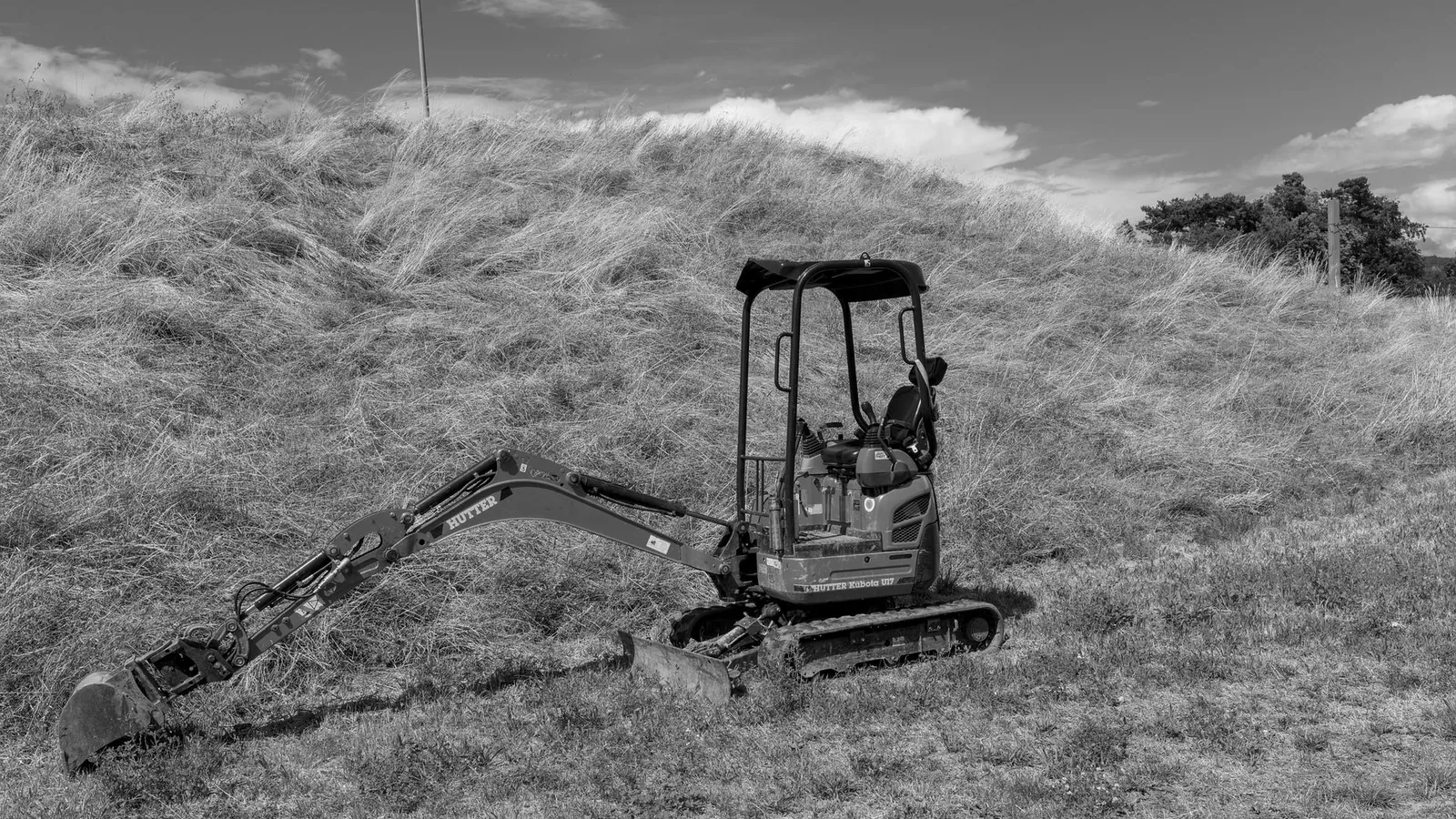
Excavation covers any controlled removal of earth: footings, foundations, trenches, crawl space digouts, pond and basin work, and cutting out failed ground to rebuild it properly.
A compact track loader reaches places full-size machines cannot — through side gates, around established trees, into back gardens — which on residential work is usually the deciding factor.
Do you need this?
If any of these sound like your property, this is the service:
- Footings or a foundation need digging for a build or addition
- A crawl space needs lowering or digging out
- Trenches are needed for utilities, drainage or irrigation
- A low area needs cutting out and rebuilding properly
How the job runs
- 1
Locate utilities
Georgia 811 at least 48 hours ahead, every time. Hitting a gas line is a life-changing event and the fines start at $1,000.
- 2
Set out and dig
Excavated to the required line and level, with spoil stockpiled where it is useful or loaded straight out.
- 3
Keep it safe
Trench depth, soil stability and shoring assessed before anyone works in an excavation. Georgia clay looks solid and collapses without warning when wet.
- 4
Backfill and restore
Backfilled and compacted in lifts where required, surface graded and made good.
What affects your price
Typical excavator hourly range. Most residential jobs are quoted as a fixed price. Depth, soil, rock, access, whether spoil leaves the site and shoring requirements are the main variables.
We quote after seeing the site, and the price we give you is fixed and in writing. Estimates are free and there is no obligation.
Get a free quoteWhy it's different in Georgia
Georgia clay is deceptive. Dry it stands almost vertical; wet it slumps. That is why trench safety and shoring matter here more than the soil appears to suggest, and why we will not put anyone in an unsupported deep trench.